Huiyi Chen

Working Paper

Social Networks and the Spread of Strikes

Revise & Resubmit, Journal of Population Economics

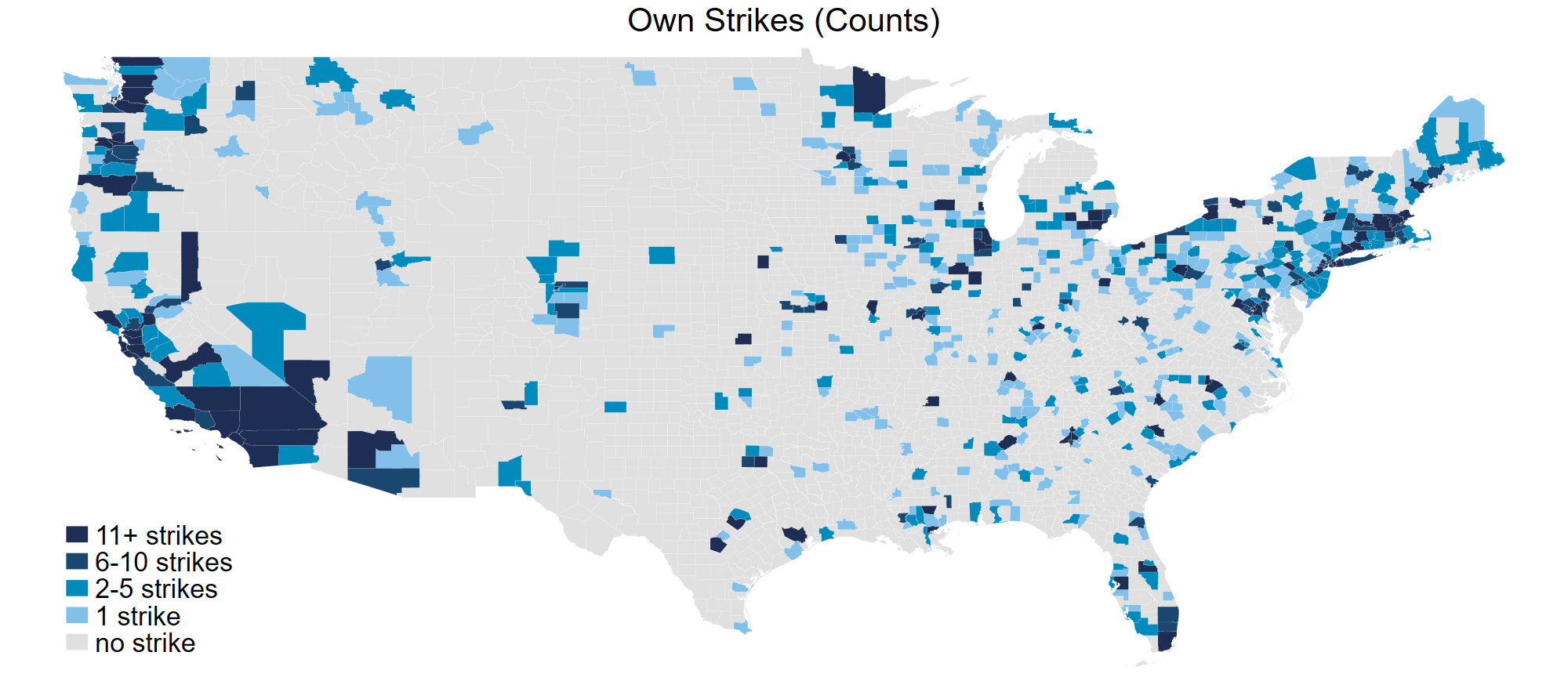
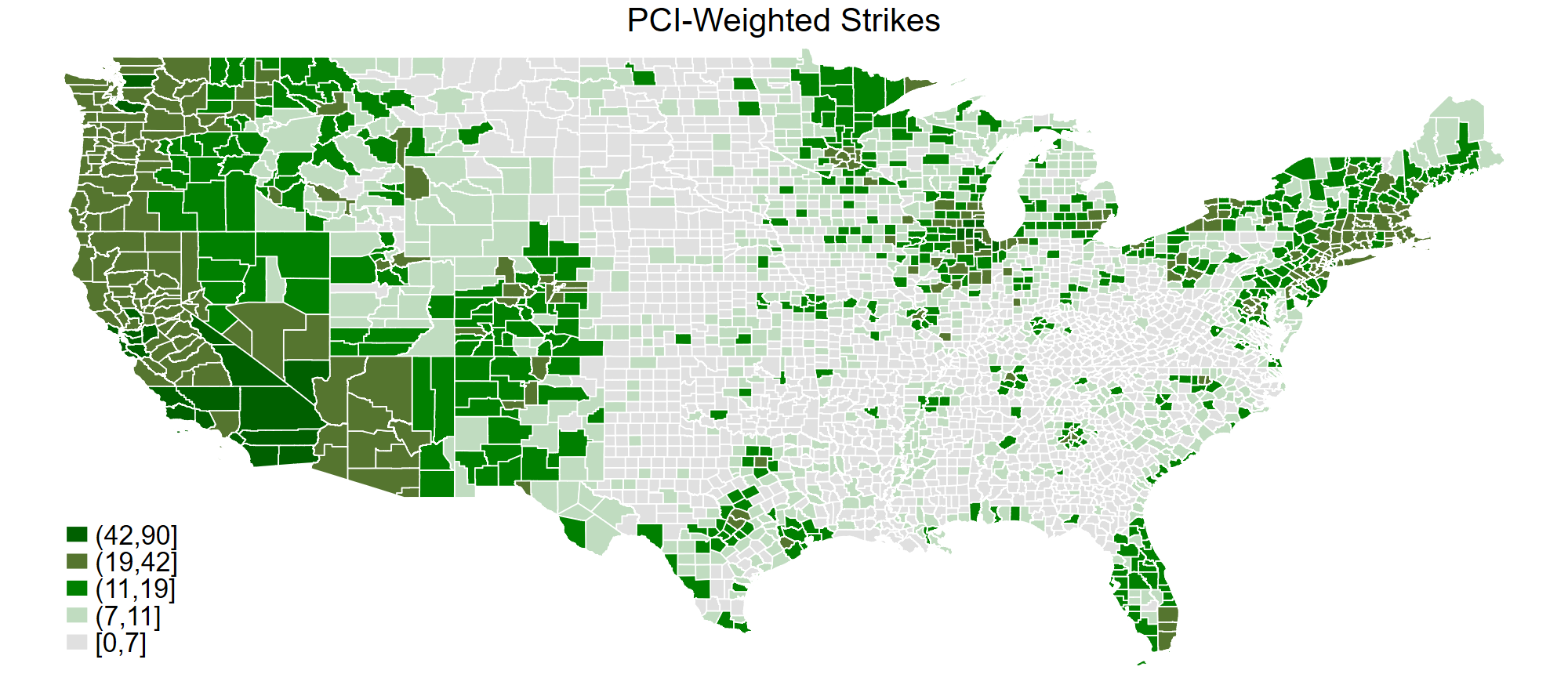
US county map: number of labor strikes per county, 2021–2024. US county map: PCI-weighted strike exposure by county.

This paper examines how labor strikes spread through social networks in the United States. Using the Cornell ILR Labor Action Tracker for 2021–2024 and Facebook-based county connectedness measures, we find that exposure to strikes in socially connected counties is strongly associated with local strike incidence. A one-standard-deviation increase in contemporaneous network exposure is associated with about 16% higher expected strike incidence, while lagged exposure is positive but imprecisely estimated. The relationship is strongest within industries and extends to strike scale, measured by the number of participants. We then test whether strike diffusion operates through information discovery or behavioral responses and find stronger evidence for the behavioral channel.

Conference Presentations: Global GLO-JOPE Conference 2025, SOLE 2026

Publications

Raising Grievances to the State: The Political Economic Effects of Anti-Corruption Crackdowns on Labor Activism in China

Journal of Development Economics, Volume 181, 2026 (Working Paper)

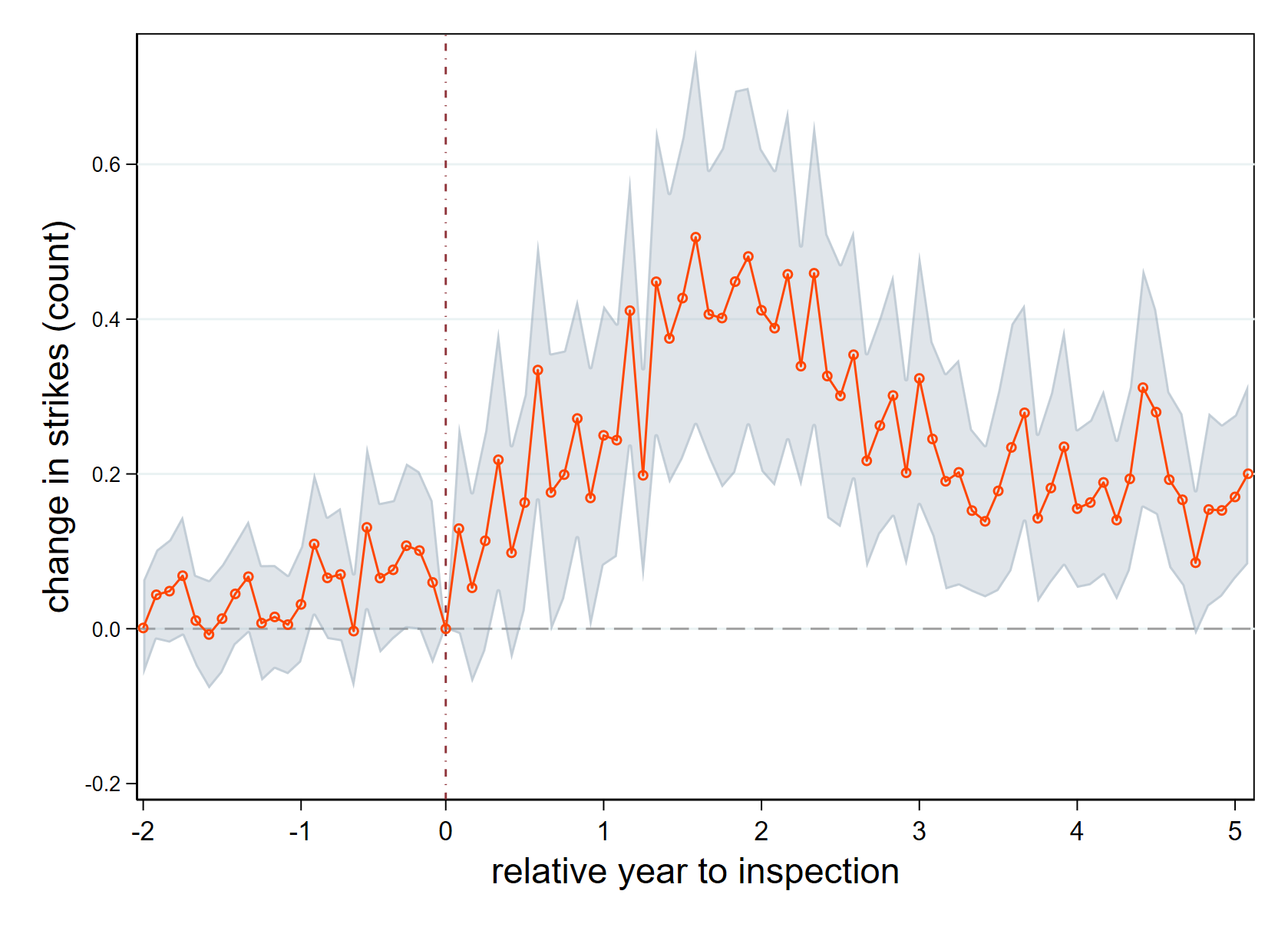
Event-study plot: change in strike count by year relative to a city's first corruption inspection.

This paper studies how government actions shape workers’ expected returns to striking by exploiting China’s anti-corruption campaign as a natural experiment. Using a city-level dataset linking corruption inspections to strikes from 2011 to 2020, I show that strike incidents rise sharply after a city’s first high-profile inspection, driven largely by wage arrears from private firms and concentrated in the construction and manufacturing sectors. Strikes also spread through network channels, with later-treated and neighboring cities responding to inspections elsewhere. Evidence indicates that inspections weakened firm–government ties and shifted government attention, raising workers’ expected returns and revealing pre-existing grievances among workers.
Check out my article on the World Bank Development Impact blog!

Who Bears the Cost of Nationalism? A Spatial Analysis on the Unintended Spillover Effects of Boycotts

Economic Inquiry, Volumne 63, Issue 1, p. 4–46, 2025

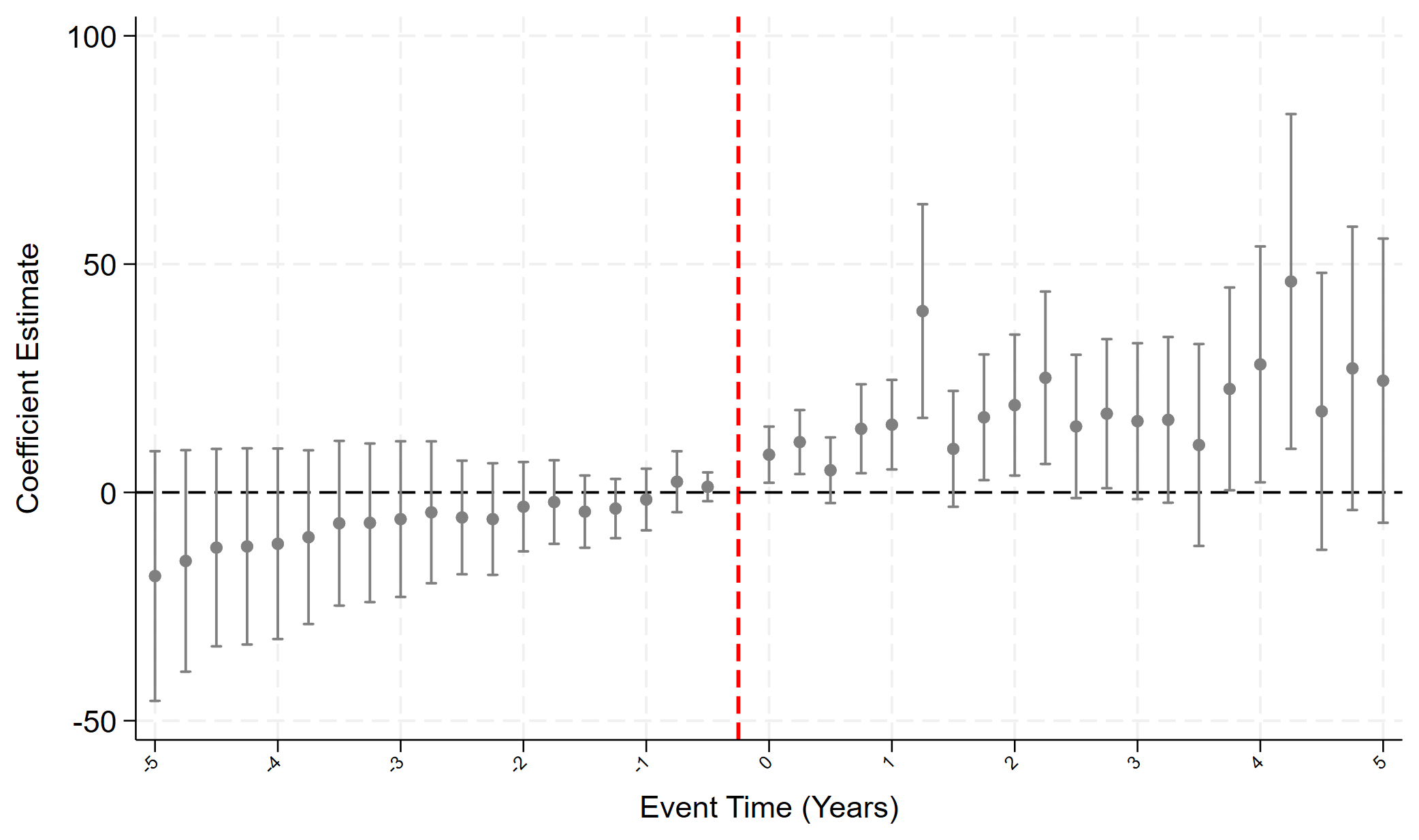
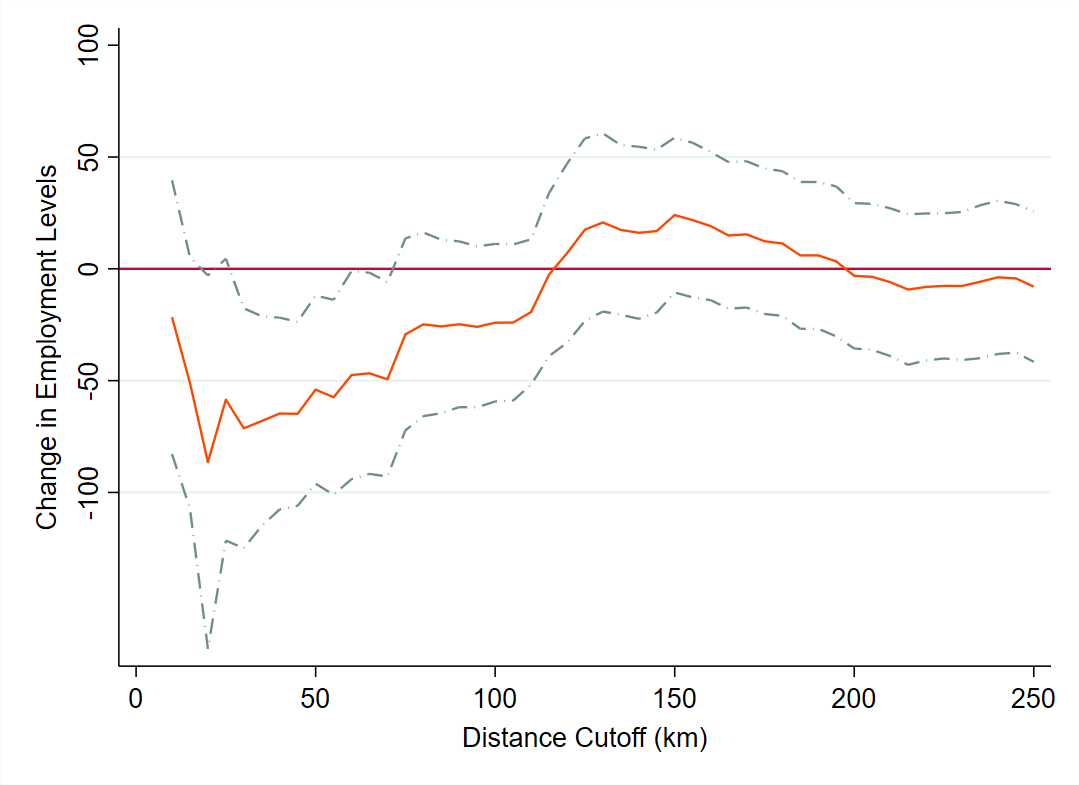
Estimated change in employment levels by distance cutoff from Japanese joint ventures, with confidence bands.

Politically motivated boycotts aim to harm the sales of goods associated with foreign rivals, but can also harm the domestic economy if the goods are domestically produced. This paper examines the unintended effects of the 2012 Chinese boycott of Japanese cars on China’s automobile supply chain. By comparing changes in employment between auto parts and non-parts industries located at various distances from Japanese joint ventures (JV), I find that auto parts manufacturers near the Japanese JVs experienced a 10-17% reduction in employment after the boycott.